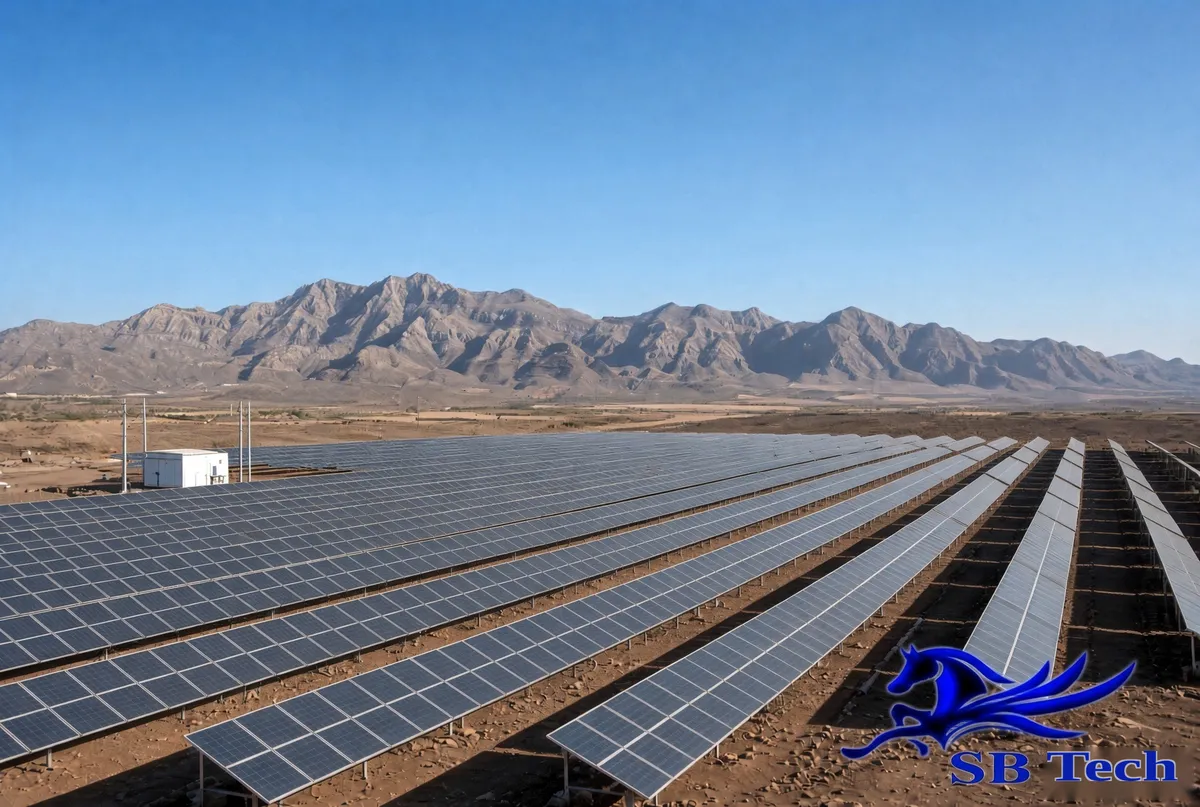
 Illustration
What counts as a 0.5 MW+ solar plant?
It is a solar installation with a capacity of at least 500 kW, built on open land or spread across large industrial roofs and sheds. At this scale the plant normally connects at higher voltage, uses transformers and switchgear, and needs formal grid connectivity and electrical safety approvals.
Main components
- Solar modules on fixed-tilt or single-axis tracking structures
- String or central inverters
- Step-up transformers, switchyard, protection relays and metering
- Evacuation line to your premises or the grid
- SCADA or remote monitoring, plus an operations and maintenance (O&M) plan
Who should consider it
- Factories with high, steady daytime demand (textile, food processing, engineering, plastics, pharma)
- Industrial parks and large warehouses with big roofs
- Universities, hospitals and large institutional campuses
- Investors seeking long-term energy assets
Land and roof considerations
- Clear title or a long-term lease covering the full project life
- Land-use conversion where state rules require it
- Flat or gently sloping, shade-free terrain with road access
- Distance to the nearest substation, as long lines add cost
- Soil, drainage and flood risk for foundations
- For rooftops: structural strength, remaining roof life and waterproofing
Typical approvals (general)
- Registration with the state nodal agency or as per the state solar policy
- Connectivity and feasibility approval from the DISCOM or transmission utility
- Electrical Inspectorate safety clearance before charging
- Open access, wheeling and banking permissions for off-site supply
- Metering and agreements with the utility, plus local land or building permissions
Procedures, charges and timelines vary by state and are revised from time to time, so they are verified at the start of each project.
Ownership and supply models
- On-site captive: the plant sits at your premises and feeds your load directly.
- Off-site captive via open access: the plant is built elsewhere and power is wheeled through the grid, subject to applicable charges and banking rules.
- Group captive: several consumers hold equity in one plant and use its power, under prescribed conditions.
- Third-party / PPA: a developer owns the plant and sells power to you under a long-term agreement, where permitted.
Each model carries different tax, legal and regulatory implications; professional advice is recommended.
Investment checks
- A generation estimate based on site-specific solar data, not thumb rules alone
- Total project cost, including evacuation and approvals
- O&M cost, inverter replacement and module degradation over the project life
- Applicable open access charges and how they may change
- Financing terms and the expected payback and returns
The environmental case is strong: a plant of this size displaces a large volume of fossil-fuel electricity every year and supports corporate sustainability goals.
Exploring a 0.5 MW+ project? Contact SB TECH on +91-9331161986 for an initial discussion.
General information for planning only. Regulations, tariffs and tax rules vary by state and change over time; they are confirmed for each project.
Talk to SB TECH about solar power plant
SB TECH, Chinsurah, Hooghly – authorised partner of SolarConnect India.