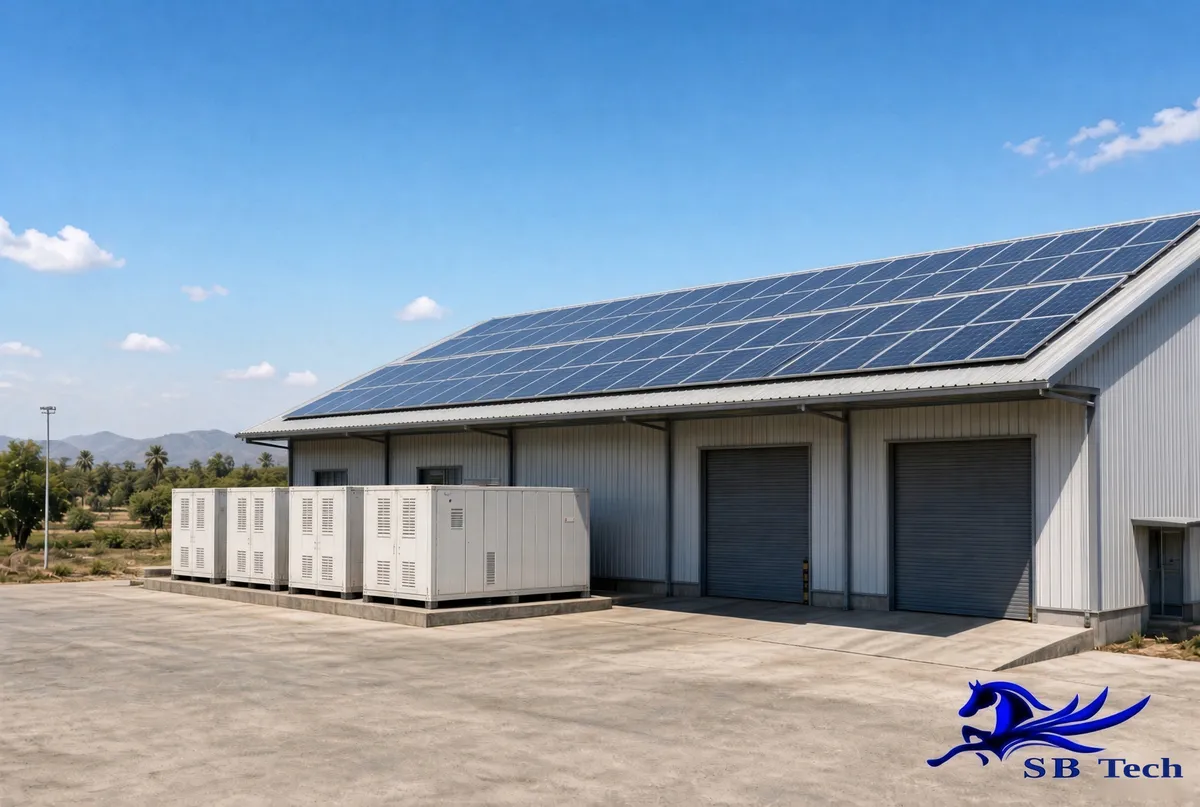
 Illustration
What is a commercial off-grid solar system?
An off-grid system is not connected to the DISCOM at all. Solar panels charge a battery bank through a charge controller, and an off-grid inverter supplies AC power to your loads day and night. Because the battery is the only source after sunset, the design must be careful and conservative.
How it works
- Panels produce DC power during the day.
- A charge controller (MPPT) charges the batteries safely.
- The inverter powers your loads from solar and batteries.
- At night and on cloudy days, loads run only from the stored energy.
- A diesel generator can be added as an emergency source for long cloudy spells, if needed.
Where it fits best
- Farm houses, fisheries, poultry and dairy units far from the grid
- Telecom shelters, site offices and construction camps
- Rural clinics, schools and community buildings
- Warehouses or resorts where a new grid line is costly or slow
Benefits
- Complete independence from grid outages and tariff changes
- Can reduce or replace diesel generator running hours
- No net-metering paperwork, since there is no grid connection
- Quiet, clean power on site
How an off-grid system is sized
- List every appliance with its wattage and daily running hours.
- Add them up to get daily energy need in units (kWh).
- Decide days of autonomy, i.e. how many cloudy days the battery must cover.
- Size the battery bank for that energy, considering safe depth of discharge.
- Size the solar array to recharge the batteries and run daytime loads together.
- Choose an inverter that handles peak and starting loads such as motors and pumps.
Costs to plan for
Off-grid is usually the most expensive of the four types per kW, mainly because of batteries. Plan for battery replacement during the project life (lithium batteries usually last longer than lead-acid but cost more upfront), a ventilated battery room and periodic servicing. Compare this total with the cost of diesel and a new grid connection.
Maintenance
- Regular panel cleaning and connection checks
- Battery health monitoring; topping up water for flooded lead-acid types
- Avoiding deep discharges by managing loads in long cloudy periods
Planning an off-grid site? Talk to SB TECH on +91-9331161986 for a load study.
General information for planning only. Regulations, tariffs and tax rules vary by state and change over time; they are confirmed for each project.
Talk to SB TECH about commercial off-grid solar power system
SB TECH, Chinsurah, Hooghly – authorised partner of SolarConnect India.